
Mostrar mensagens com a etiqueta Jazz. Mostrar todas as mensagens
Mostrar mensagens com a etiqueta Jazz. Mostrar todas as mensagens
 Here is an intriguing album featuring harmonica virtuoso Cham-Ber Huang in duets with Danish accordionist Mogens Ellegaard. Huang, who emigrated from Shanghai in 1950, is quite a sensitive player and manages to make harmonica arrangements of classical pieces sound completely natural -- no easy trick. Ellegaard was likewise an excellent musician, and in later years went on to record a great deal of experimental music, by the likes of Per Norgaard and Arne Nordheim. I've given you Huang and Ellegaard's fine performance of Bela Bartok's Roumanian Folk Dances, composed in 1915.
In 2011, the band will release its sophomore CD, Cicada. Like that mysterious insect, who as a nymph lives in the earth surrounded by roots and then comes forth to sing, the music created by these eight accomplished and inventive musicians is earthy and at one with its origins, but suggestive of mysterious worlds beyond.A pointer to Hazmat’s methodology can be found in the band’s configuration. Schuman’s guitar, diatonic harmonica and intensely earthy vocals set the tone. A solid battery of sounds—tuba, chromatic harmonica, trumpet, flugelhorn, trombone, tenor and baritone saxes, piccolo and duduk, mandocello and steel guitar—explores the textural and melodic outer limits of Hazmat’s meticulously woven compositions, while guitars and drums lock down a groove and provide sonic spicing.

Bruno De Filippi is born in Milan on May 8, 1930 and dedicates all his life to music.Since his first years he shows a special passion for music. At the age of seven, his uncle Andrea shows him how to put his fingers on mandolin strings, teaching him his first chords.Bruno meets pianist Don Friedman in the ’90s, and they begin to collaborate. Several albums are recorded, and they tour in Europe, the United States, Canada, Australia, Japan, Indonesia and Hong Kong. As a duo, they achieve significant success with the public and with critics.

Albert Raisner (30 September 1922 – 1 January 2011) was a French harmonica player, founder of the award-wining Trio Raisner and a TV and radio host and producer. He was the host of the hit show Age Tendre et Tetes de Bois, which aired from 1961 to 1967 and featured world-renowned artists including The Beatles, Elvis Presley, Stevie Wonder, Isaac Hayes and French singers Johnny Hallyday and Claude Francois. He is regarded as an icon and a pioneer of French television and was knighted by the French president in 1977.

With the release of his third album entitled “Diversions” Thierry has created a repertoire of many contrasts, sometimes light and optimistic, sometimes lyrical and deeply moving. This Belgian harmonica player was born in 1958. As a self-taught musician, he was very early involved in listening to great harp players like, of course, the Belgian Master Toots Thielemans. But he was also loving the sound of Blues Harp that much. So, unlike most harpists who favor one or the other, Thierry became equally proficient on both chromatic and diatonic harmonicas.

Harmonica Pierre (“America’s Got Talent 2010″), harmonica virtuoso, was born in Belgium and studied the violin as a child. He fell in love with the sound of the harmonica at age 15, after he heard world-renown harmonica virtuoso Larry Adler. Pierre subsequently taught himself to play the harmonica using his violin method books. Pierre was the soloist for the Trio Candido, who won the Harmonica World Championship in Luxembourg in 1957. They toured Europe and the United States from the 1960s through the 1980s.
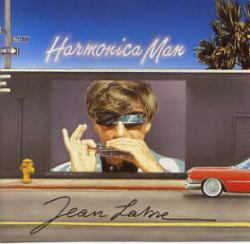
To get acquainted to Jean Labre, let’s go back in time. Everything is beginning in the end of the forties, in an harmonica club called " Charm ", founded by Albert RAISNER. Jean is often there with his first trio " Les Vagabonds de l’Hudson " as soloist, with Robert Prouff (chord) and, successively, Jean Bouhours and Marc Pero (bass).
In 1949, he is contacted by Borrah MINEVITCH to be part of the new european famous ensemble : the " Rascals ". But he is under 20 and is obliged to decline the proposition to which his father is firmly opposed.

When the harmonica is heard in jazz, it is most often the 12-tone chromatic harmonica, not the diatonic “blues harp,” which is associated more with Bob Dylan and Chicago blues. Howard Levy, however, has almost single-handedly developed the full jazz potential of the diatonic harmonica. His harp can be heard with the original version of Béla Fleck’s Flecktones and with Paquito D’Rivera and Kurt Elling, as well as on a host of pop recordings by artists as varied as Steely Dan and Dolly Parton.
Subscrever:
Mensagens (Atom)


